
Randomly Rudimentary Faith Stuff
Just some dad trying to leave a footprint for his kids to walk in if they need to know where to go
When Conquest Passes for Greatness
By LONNIE KING
I’ve somehow wound up on a lot of email lists. As a result of that, I got an email the other day from one of those historical trivia sites. The subject line said something like:
“Meet the General Who Conquered More Land Than Napoleon — and You’ve Probably Never Heard of Him.”
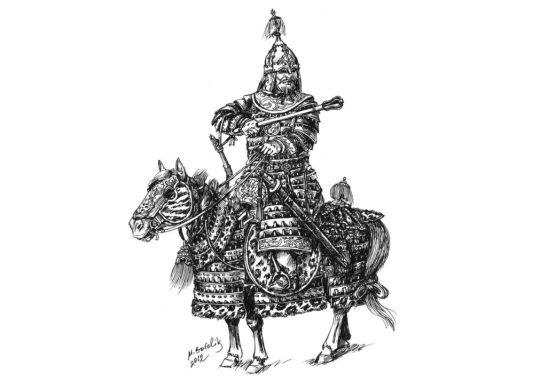
They were talking about Subutai, a Mongol general who led brutal campaigns across Asia and Europe in the 1200s.
According to historians, he was a military genius, responsible for planning over 20 major campaigns and capturing more territory than anyone else in history.
Yet, outside of history buffs or military scholars, hardly anyone knows his name.
I’ll admit, I even had to ask ChatGPT if this was a real person. That’s how obscure Subutai is to people like me, despite his massive impact on history.
And that fact, if I’m being honest, makes the larger point: we’re often taught to admire “great conquerors” without really knowing who they were or what their campaigns actually cost in human terms.
The Reverence of Military Might
There’s a certain cultural awe we reserve for people who conquer. Not just in the pages of history, but in the way we talk about leadership even now—words like strongman, dominant, unrelenting all come with a wink of admiration, even when they’re paired with brutality.
Some of us get captivated by political ‘leaders’ who seemingly stomp around like a bull in a china closet. In business, it’s often the ‘take-no-prisoners’ mentality that we are conditioned to admire. Even in our personal relationships, we can be drawn to people who know what they want in life and won’t let anything or anyone stand in their way of getting it.
Maybe that fascination is just part of human nature. We’re drawn to tales of strategy, audacity, and larger-than-life figures who bend history to their will.
But at what cost? The admiration we show doesn’t usually account for the suffering, displacement, or destruction left behind. In the case of these historical figures, if we tally the dead, the broken cultures, the stolen lands, do we still call them great…or just effective?
What We Were Taught…and What We Weren’t

I’ve been reflecting on this because it feels familiar. When I was in school, the way we learned about figures like Andrew Jackson felt reverent, too.
He was the hero of the Battle of New Orleans, the tough-as-nails president who stood up for the “common man,” the face on the twenty-dollar bill.
But the version we got was conveniently edited.
We were barely taught (if at all) that Jackson was also the driving force behind the Trail of Tears, the forced removal of tens of thousands of Native Americans from their ancestral lands.
Under the Indian Removal Act he championed, entire tribes were marched westward under military escort, thousands dying along the way from disease, exposure, and starvation. It was a campaign of displacement and death, sanitized as “policy.”
I wonder now how differently I would’ve seen the world if that part of the story had been central—not just a footnote.
And maybe that education—or the lack of it—helps explain why, growing up, the TV shows and movies I watched in the 60s and 70s often portrayed Native Americans as “savages.”
The trope wasn’t just about lazy writing; it was a cultural extension of the same narrative that Andrew Jackson pushed. If indigenous people are seen as less-than, as obstacles to progress, then it becomes easier—even justifiable—to remove them.
We can pretend that was just storytelling, but let’s not kid ourselves. Stories shape values. And for a long time, those stories taught us that conquest was noble, and those who were conquered probably deserved it.
Necessary Battles vs. Imperial Mindsets
I’m not naïve. I understand that sometimes battles must be fought—for independence, for freedom, to stop tyranny. History is full of wars that, tragic as they were, may have been unavoidable.
But imperial conquest? Marching into someone else’s land just because you want more of it?
That’s not greatness. That’s glorified greed.
Yet we keep revering those who pull it off. We still call them “great,” their strategies studied, their names etched into monuments and currency.
What If We Remembered Differently?
What if we redefined greatness? What if we taught history not just by the scale of one’s conquests, but by the cost of them? Not by how many miles they advanced, but how many lives they preserved?
I can’t help but wonder how differently we’d see our current political leaders, too—the ones who wrap themselves in the language of strength, dominance, and power. When we’re conditioned to admire the conqueror, we don’t always notice the casualties—literal or cultural—left behind.
But, maybe greatness isn’t about how far you can spread your flag.
Maybe it’s about how few people you have to bury to do it.
 Randomly Rudimentary Faith Stuff