
Randomly Rudimentary Life Stuff
Learning to live authentically, and not settling for substitutes or counterfeits, and sharing those thoughts
The Death of a Dream, the Rise of Rage
On hopelessness, belonging, and whether democracy can survive without a future people believe in
By LONNIE KING
The recent shooting tied to the White House Correspondents’ Dinner has stirred the predictable arguments.
Gun laws. Security failures. Political extremism. Mental instability.
Some of those conversations matter.
But I keep finding myself pulled toward a deeper question:
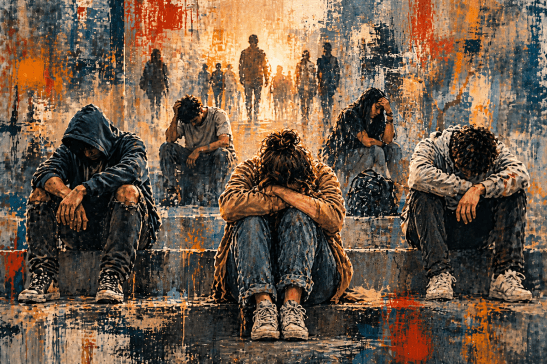
What happens when people stop believing the future has anything to offer them?
This was not an isolated eruption. It sits alongside other attacks, threats, and attempted acts of political violence in recent years. In more than one case, young adults have been involved.
I’m hesitant to draw sweeping conclusions from that alone. But it raises a question worth asking.
What if some of this violence is not only ideological, but existential? What if, beneath rage, there is despair?
The Story We Used to Tell Ourselves
For generations, Americans were shaped by a story—part myth, part promise—that life could improve.
Work hard. Contribute. Keep faith with the system. Tomorrow may be better than today.
We called it the American Dream.
To be honest, that dream was never equally available to everyone. But it still functioned as a shared social imagination. And shared imaginations matter.
Because when people stop believing there is a future worth investing in, something else often rushes in to occupy the vacancy.
Cynicism. Resentment. Conspiracy. Sometimes even nihilism.
When Hopelessness Becomes an Ecosystem
I’m not suggesting political violence can be explained away as disappointed ambition. Violence is still violence.
But I am wondering whether hopelessness may be part of the emotional and social ecosystem in which rage grows.
Housing feels unattainable for many. Work feels precarious. Politics often feels performative. Social media monetizes grievance. Even truth itself can feel unstable.
And in that atmosphere, some damaged souls may begin to see destruction as agency. Not because violence makes sense. But because despair often doesn’t.
Maybe the Deeper Crisis Is Belonging
Maybe what is eroding is not merely a dream of prosperity. Maybe it is a sense of belonging. A belief one has a stake in the common good. A conviction democratic life, however flawed, can still be repaired.
When that disappears, politics stops being shared work and starts becoming spectacle. And spectacle can turn dark.
Democracy Runs on Hope
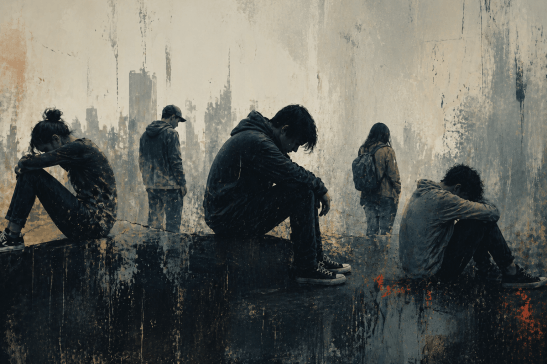
I don’t write this to indict a generation.
In many ways, younger people may simply be perceiving fractures older generations have learned to normalize. Their disillusionment may not be irrational.
That ought to concern us. Because democracy does not survive on procedures alone. It survives on hope.
Not optimism…hope.
The stubborn belief that participation matters, truth matters, and repair remains possible.
When Dreams Die
Maybe the deepest danger we face is not simply that some citizens have become angry. It is that too many may be unconvinced anything worth building remains. And when dreams die without something better replacing them, rage can begin to look like meaning.
That may be one of the most dangerous illusions of all.
Grace and grit to you! — LK
 Randomly Rudimentary Life Stuff